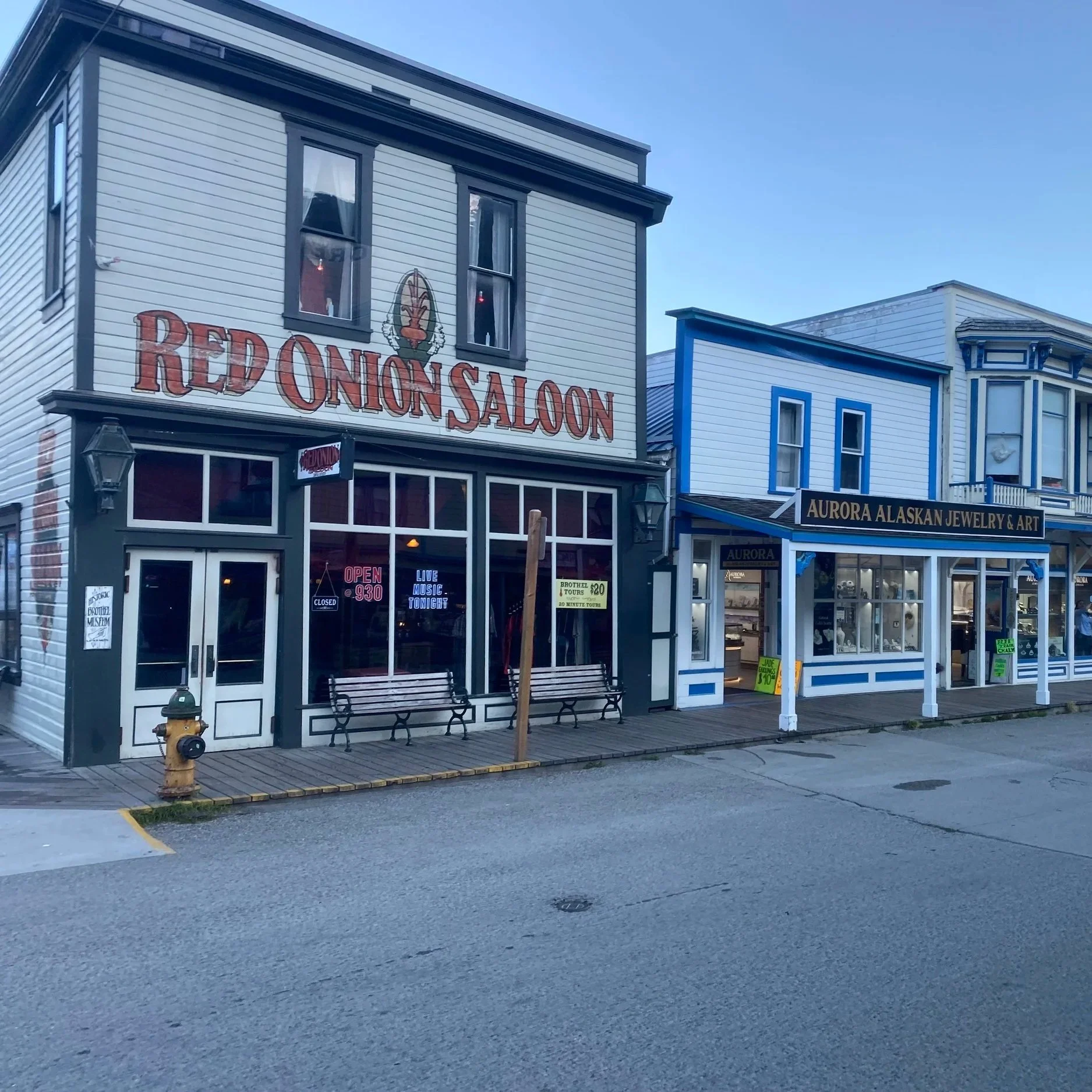
My Alaskan Adventure Part 4 - Skagway
Our excursion for Skagway was a bus ride through 4 different climate zones including coastal, temperate rainforest, subarctic and one more I cannot recall (tundra perhaps?), and an Alaskan puppy play experience. We booked through Skagway Tours, and our tour guide, Noah, was phenomenal. He explained that Skagway, in the Tlingit language, means “land of the north winds.” Rene asked why there were trees with branches missing on one side. He explained that the vicious north wind is so severe that often it will take off branches from the sides of pine trees. Alaska, in the Tlingit language, means “land of the crashing waves.”
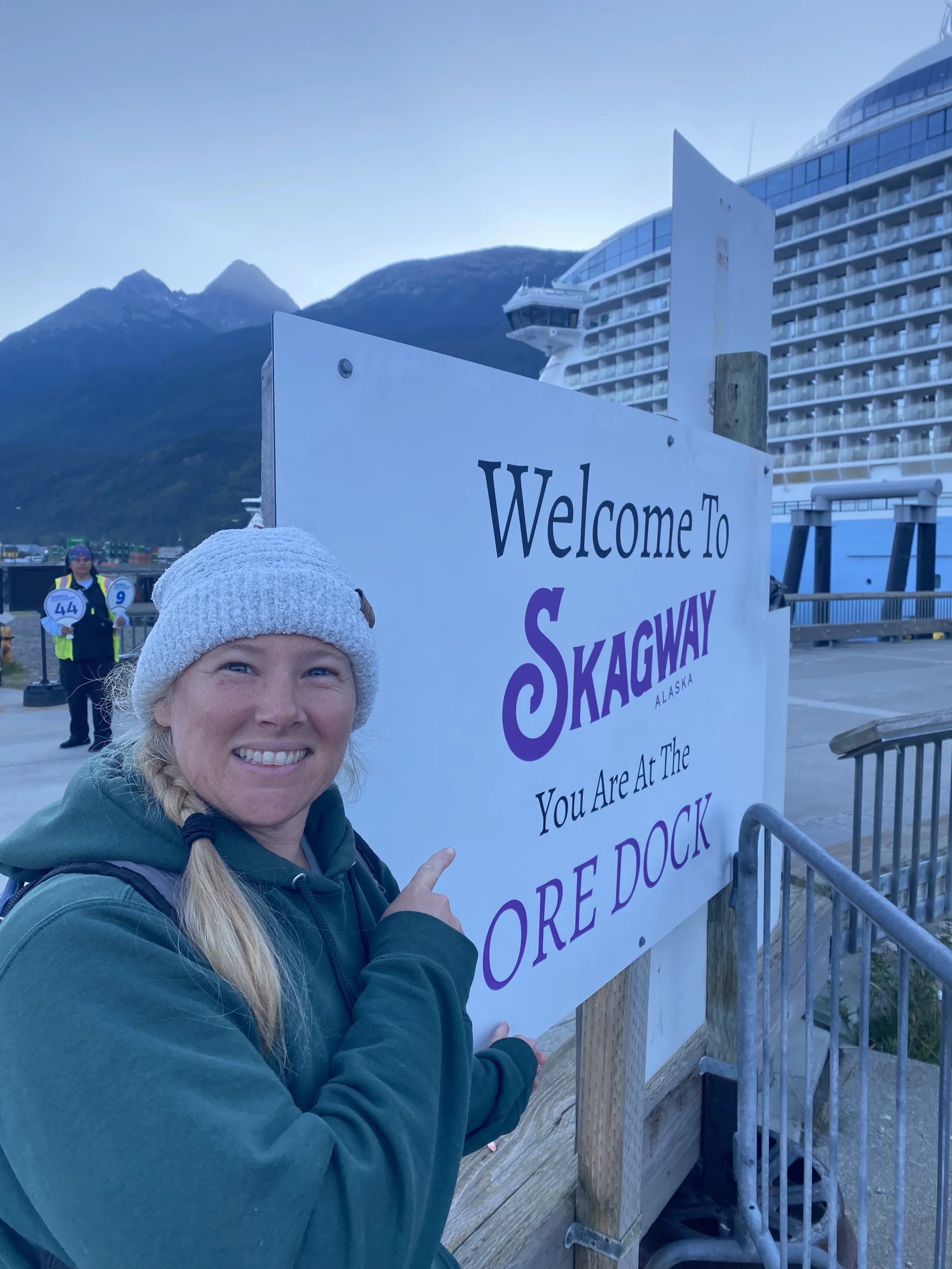
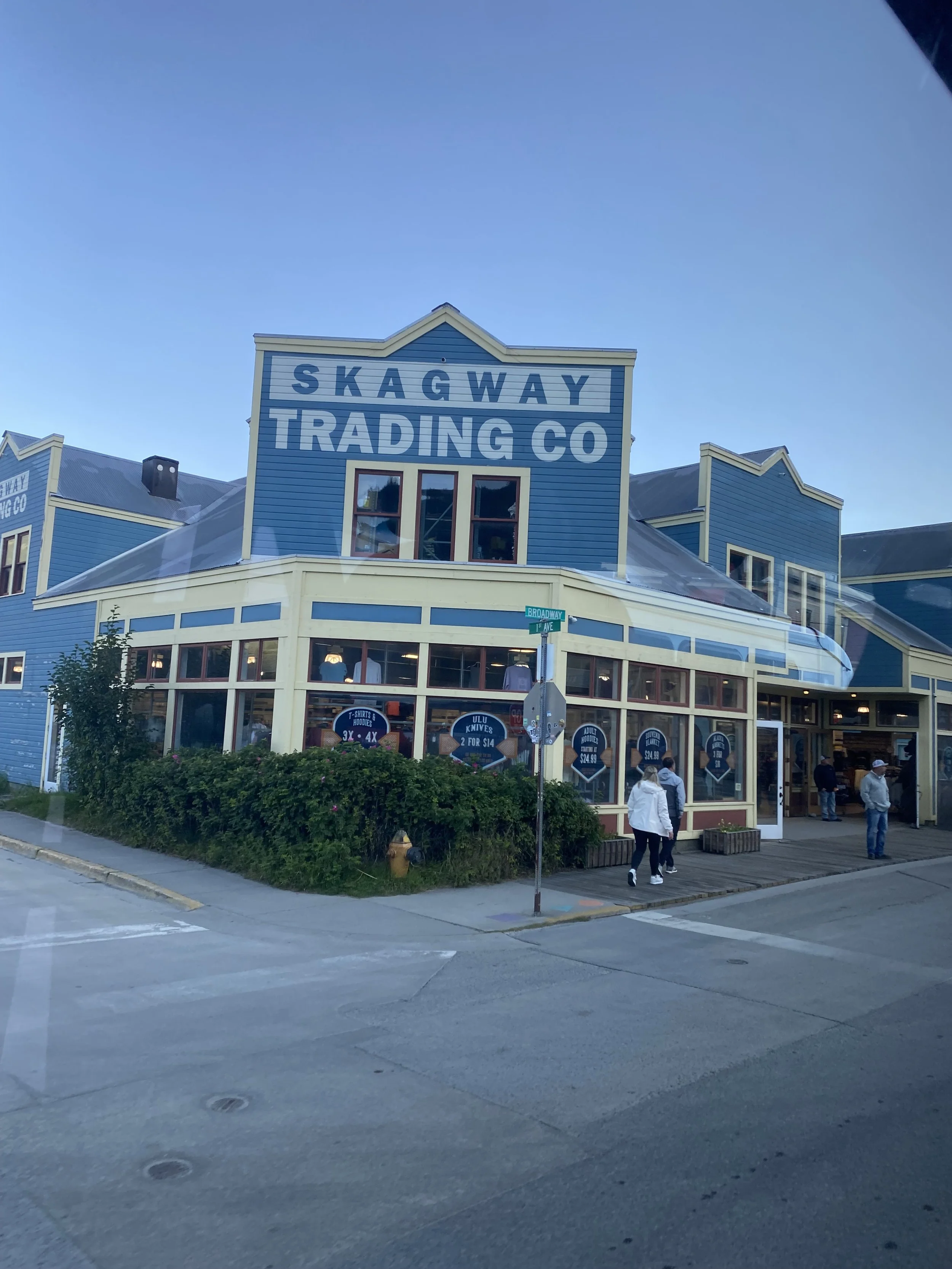
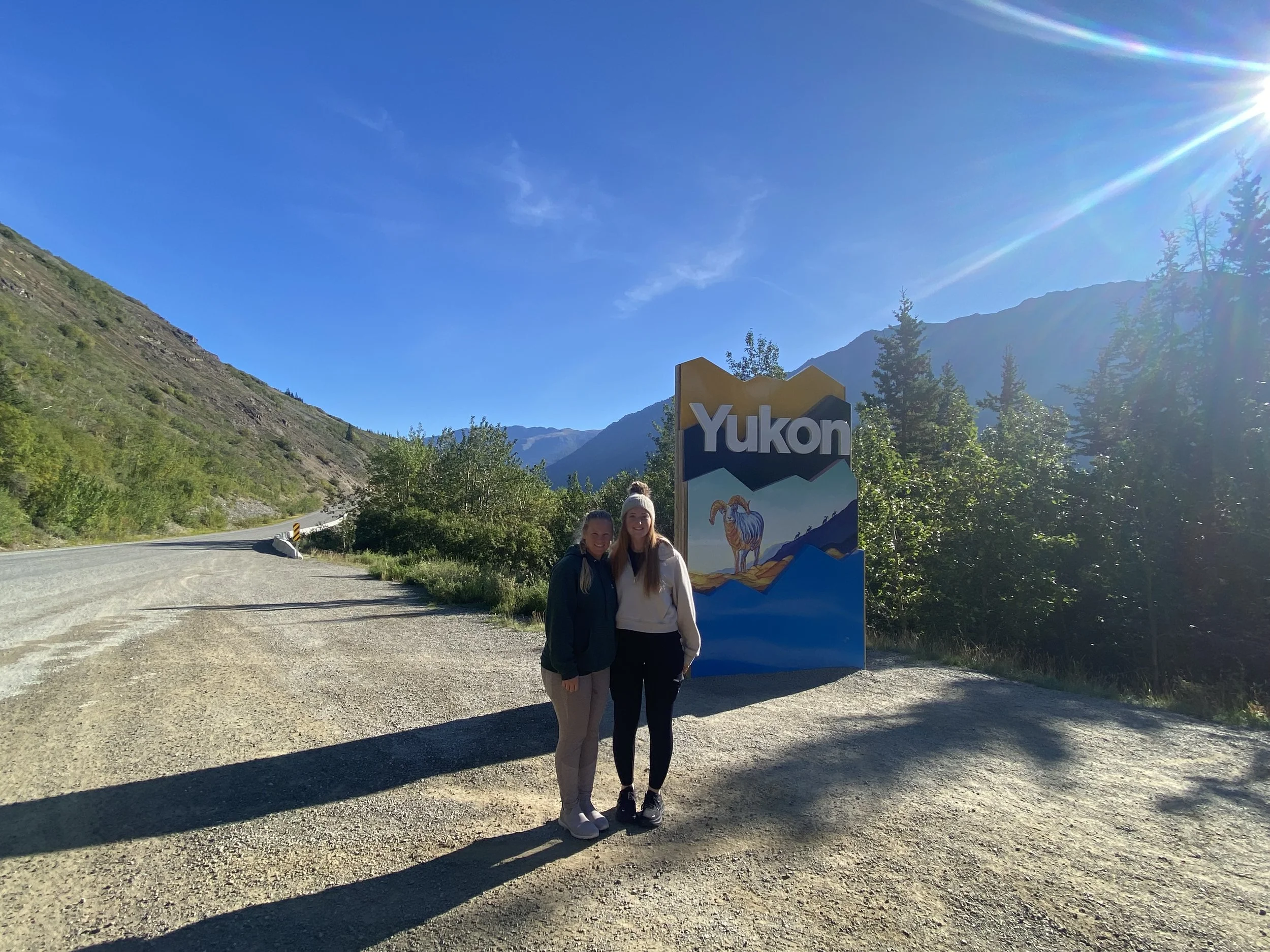
Noah enlightened us with the history of Skagway and some amusing anecdotes of his tour guiding experiences while we rumbled up on highway 98, passing through both U.S. and Canadian border and customs checkpoints. Skagway was a boomtown built during the Klondike gold rush in the 1800s. We passed by a building that housed a bakery (still operating) on the ground floor, and a brothel (currently not in operation) on the 2nd floor. The punchline for the bakery/brothel was ‘Get your hot buns on the bottom and your sticky buns on the top’.
Most of the population is temporary, meaning, they are seasonal workers that come for the cruise ships, and then return home for the winter. But despite a small permanent population, Skagway boasts having a k-12 school, the last surviving Blockbuster video rental store, and a RadioShack. Noah explained that their students always score high on graduation exams and receive full scholarships to universities. Seniors get to celebrate their senior prom on a Princess cruise ship. With this year’s graduating class of four..
Driving through the US Customs, Noah explained that both the US Customs and the Canadian Customs are approximately 8 miles out from the actual US/Canadian Border. During the harsh winter months, the road is often impassable over the mountain, so both countries put their customs a bit outside the border. Soooo, there’s approximately 16 miles of no man’s land. Hmm, possibilities.
Noah told a story about one time he was driving the tour bus through customs and an alarm sounded. The customs agent quickly told him to stop and park the bus. Noah asked his passengers, “Anyone care to shed any light on the situation?” 90 seconds of silence. Then an older gentleman slowly made his way to the front of the bus, “I think I know what is happening.” “Do tell,” Noah encouraged. The passenger explained that he had radiation therapy 3 days before the cruise. Noah, whose dad had also gone through radiation therapy earlier, was well aware of the implications of such treatment. In fact, he could tell you how many days after treatment (7-10) you are recommended to lie low as in away from other people. Particularly children, the elderly, immunocompromised and pregnant people. The borders and customs officials removed the gentleman and took him inside the building. Less than an hour later they all came out laughing, joking and exchanging joviality. The officials told Noah that it was all good to continue with the tour. But…. There was paperwork to complete. Noah said the paperwork didn’t take too long, but when he returned, everyone on the bus had moved 15 feet away from the radioactive passenger.
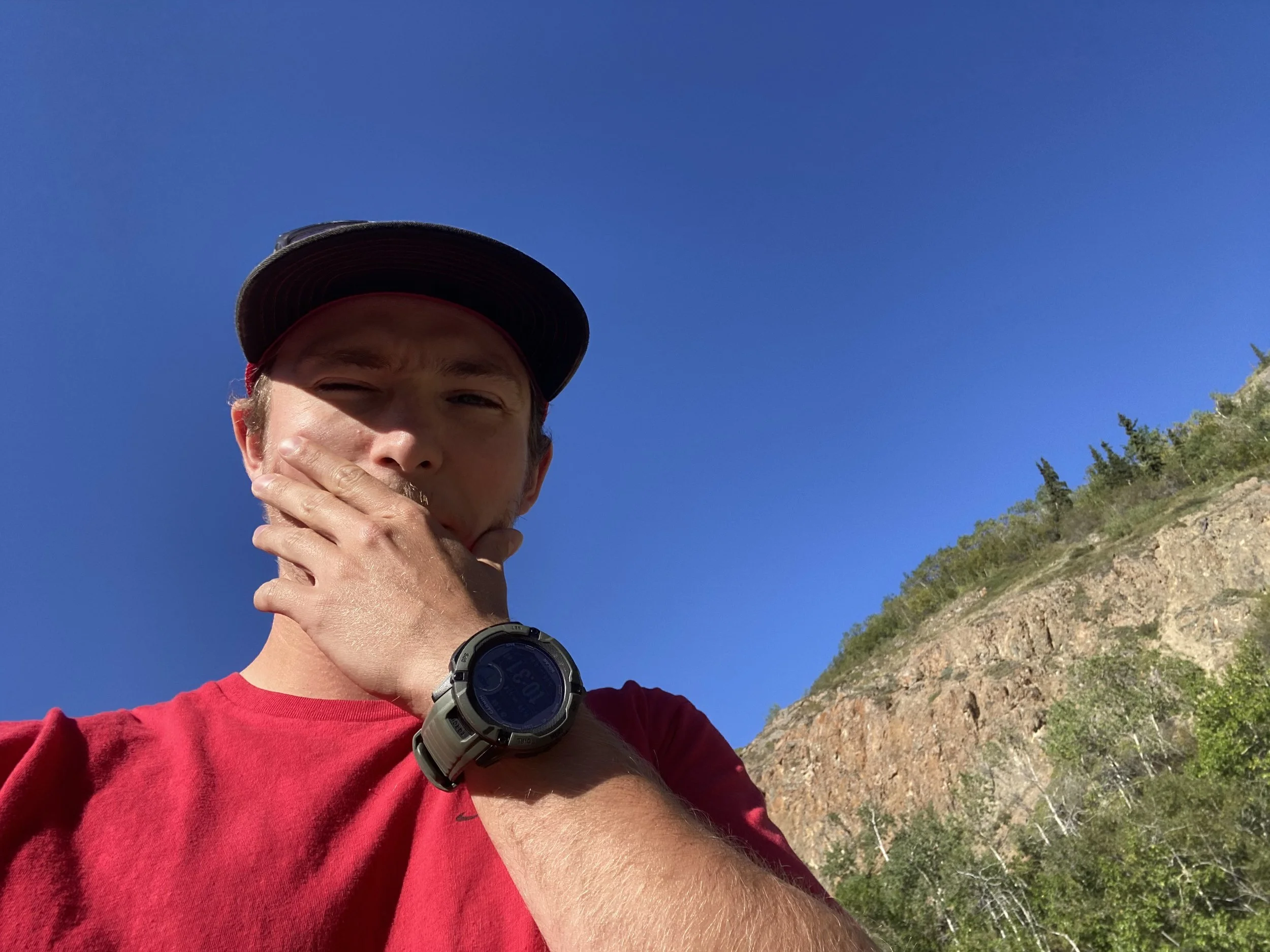
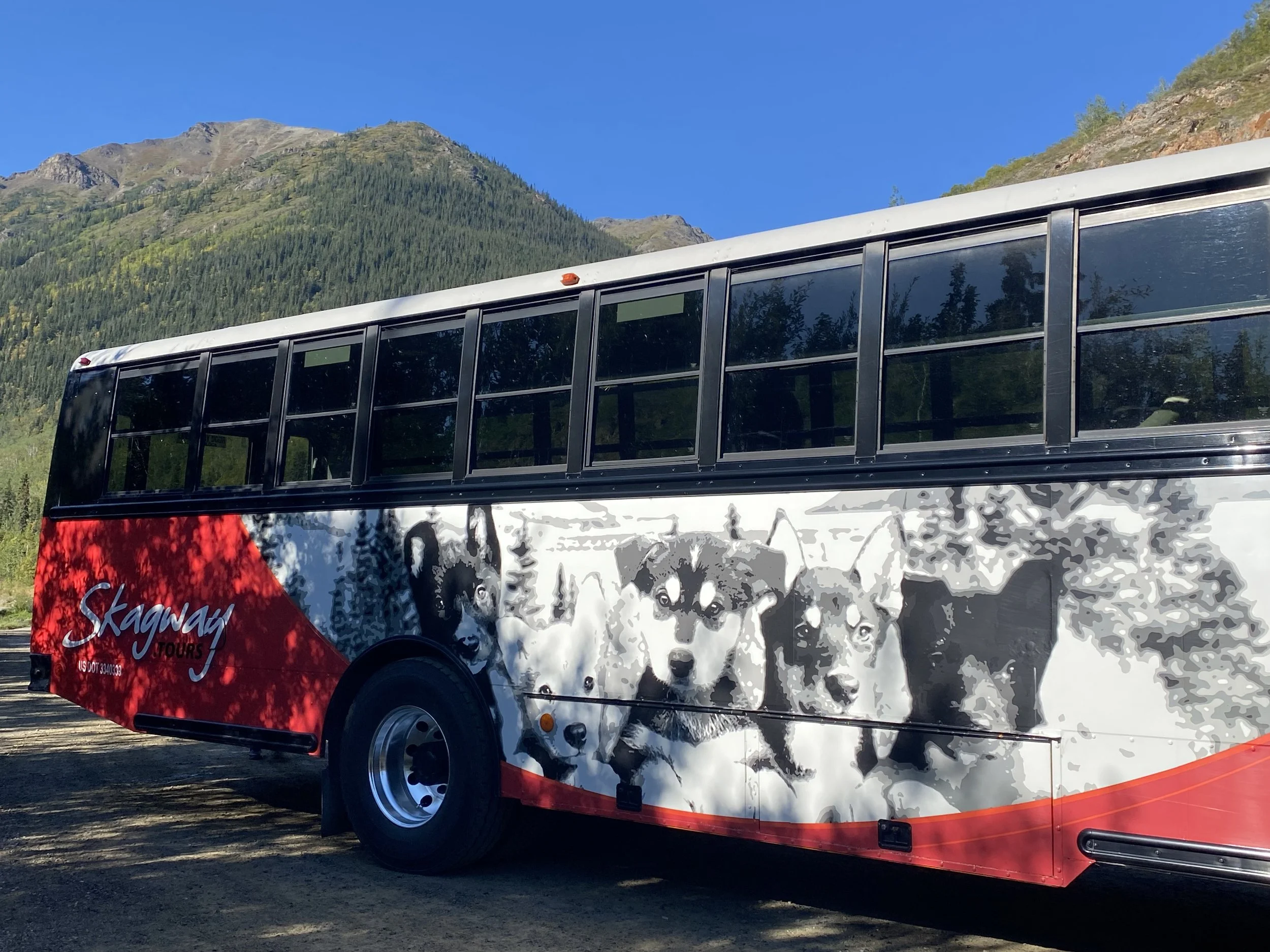
Noah, taking pictures of himself
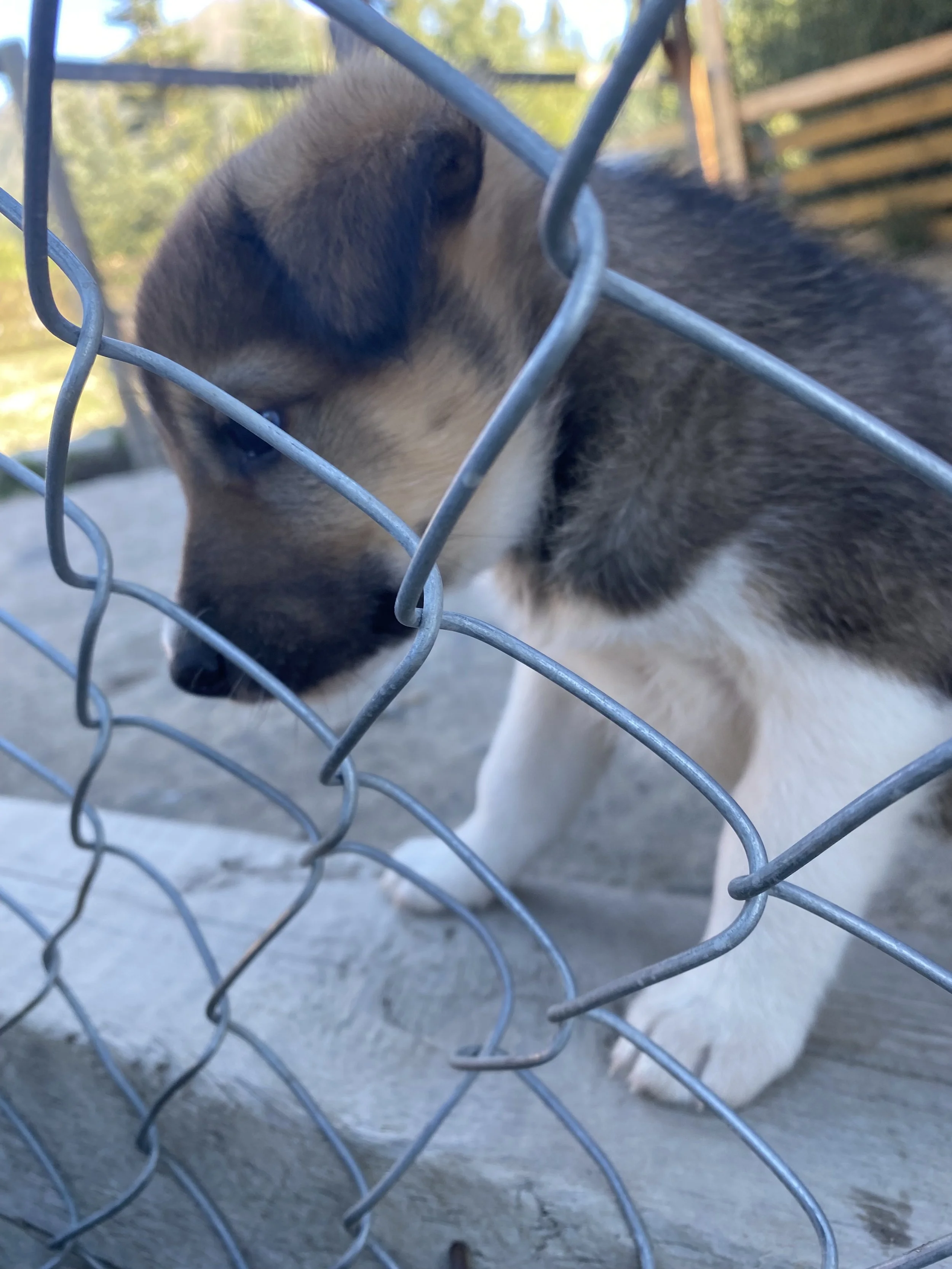
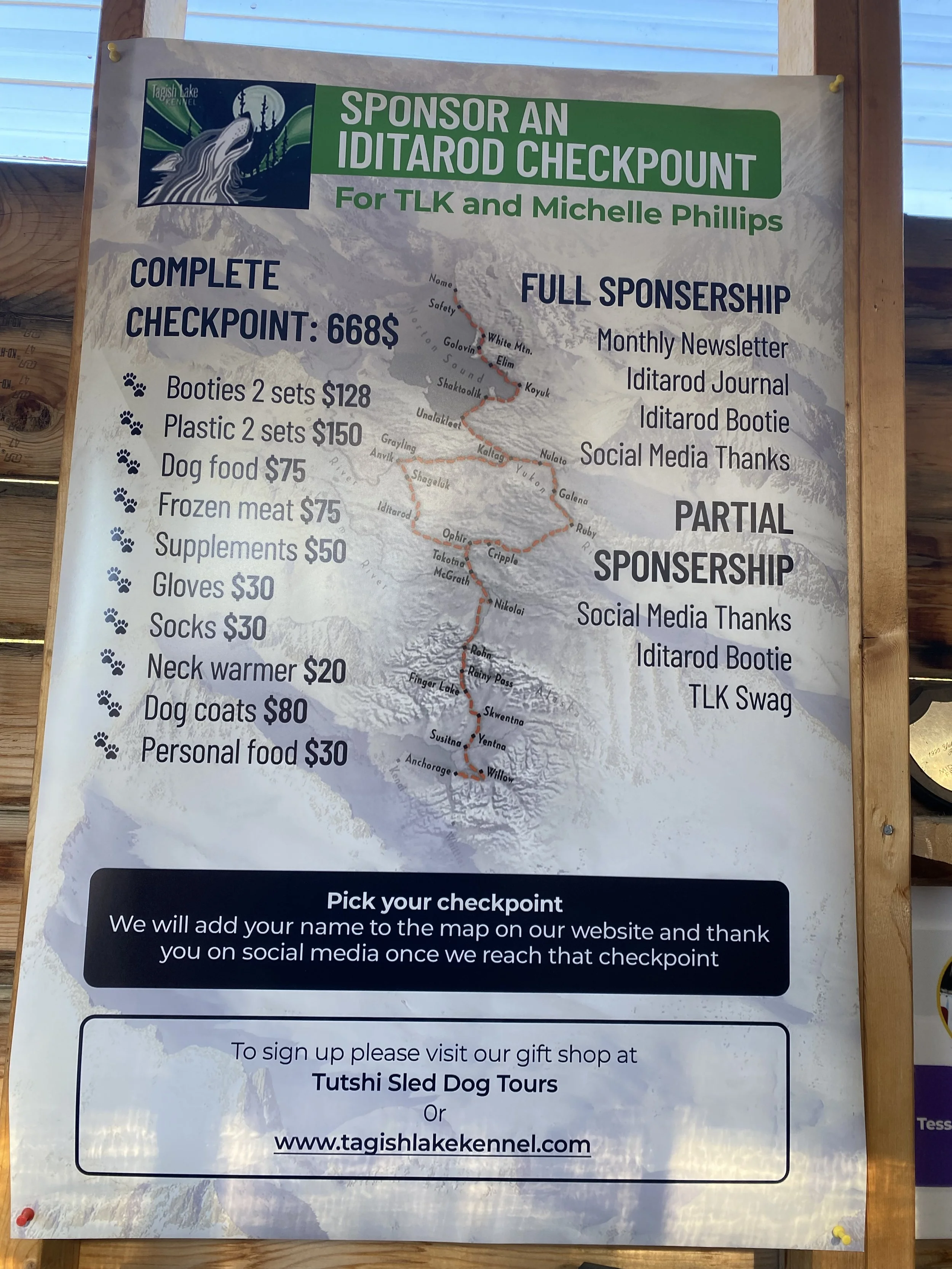
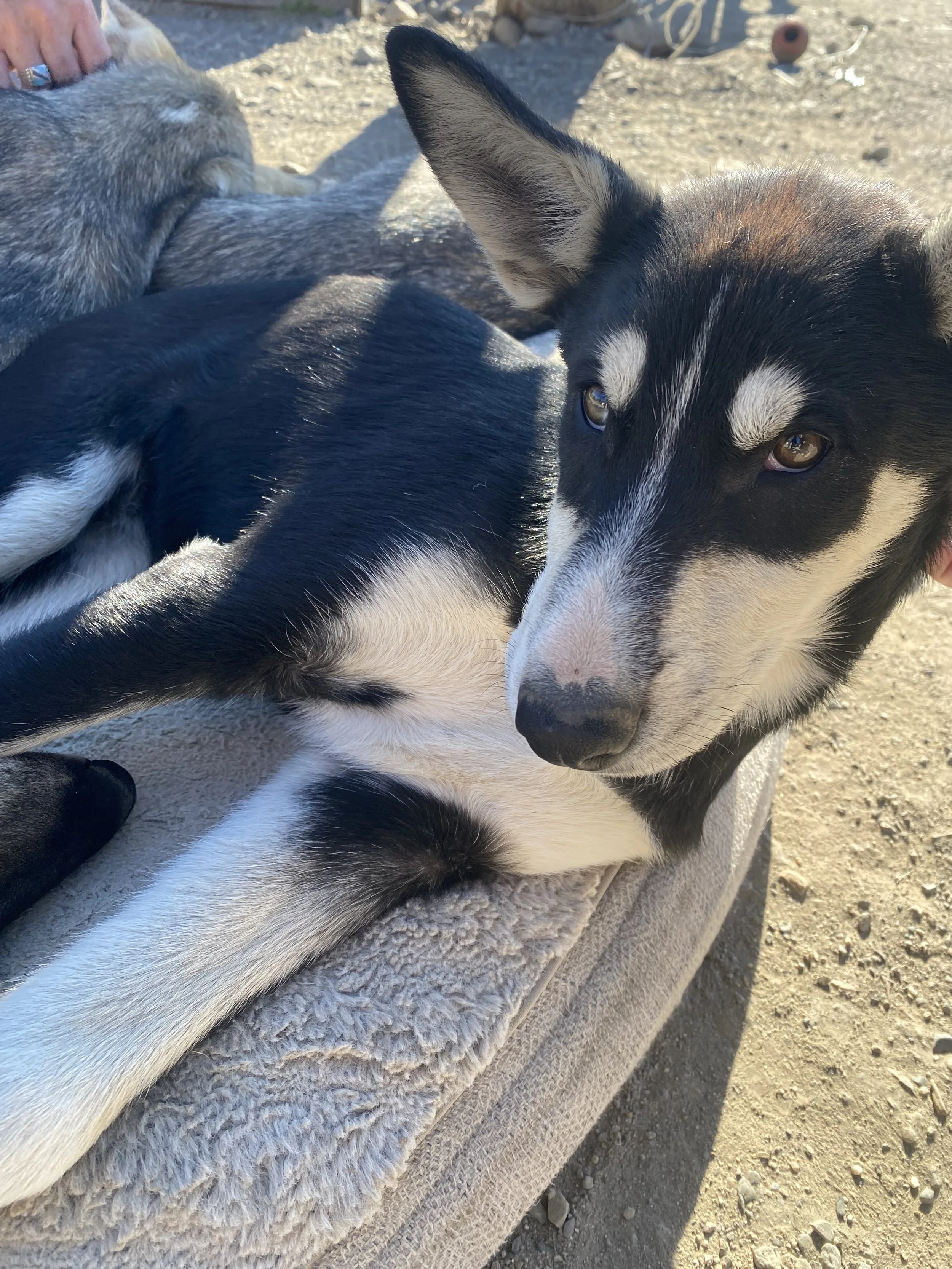
We arrived at the musher residence of Michelle Philips. She owns about 60 Alaskan huskies. She trains them all year for the Iditarod and Yukon races. We got to pet some 4-week, 10-week, and 13-week-old puppies. Alaskan huskies are different from Siberian huskies. Alaskan huskies are smaller, leaner, and darker in coloring. They have two coats. The outer fur coat is water and snow resistant. The inner coat acts as an insulator. They feel very comfortable at -20 degrees Fahrenheit. Mushers choose their training dogs carefully. If the dog doesn’t get excited about running, they don’t run them. Instead, they’ll be kept for breeding or sold as pets. These dogs can run upward of 100 miles per day. They eat a diet of mostly fat. Water freezes in the temperatures that they compete in, so they are hydrated by their food. It takes quite a bit of funds to care for the dogs and the equipment. The prize money for winning a big race is about $60,000. Michelle had a sign posted where you can sponsor her team, dogs, or camp stops.
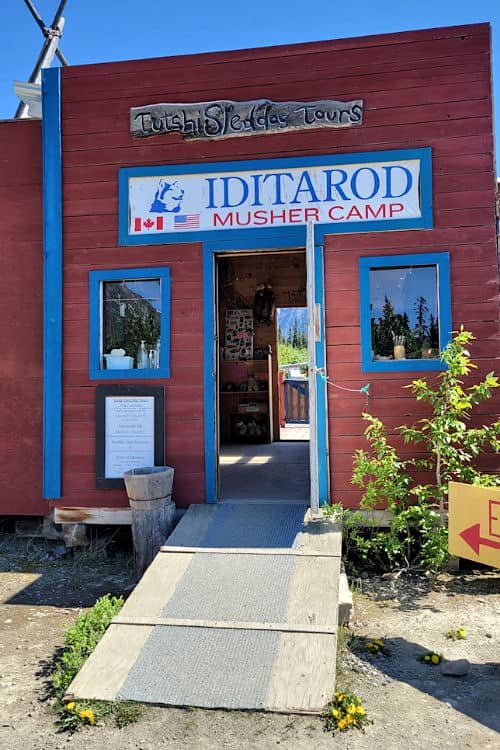
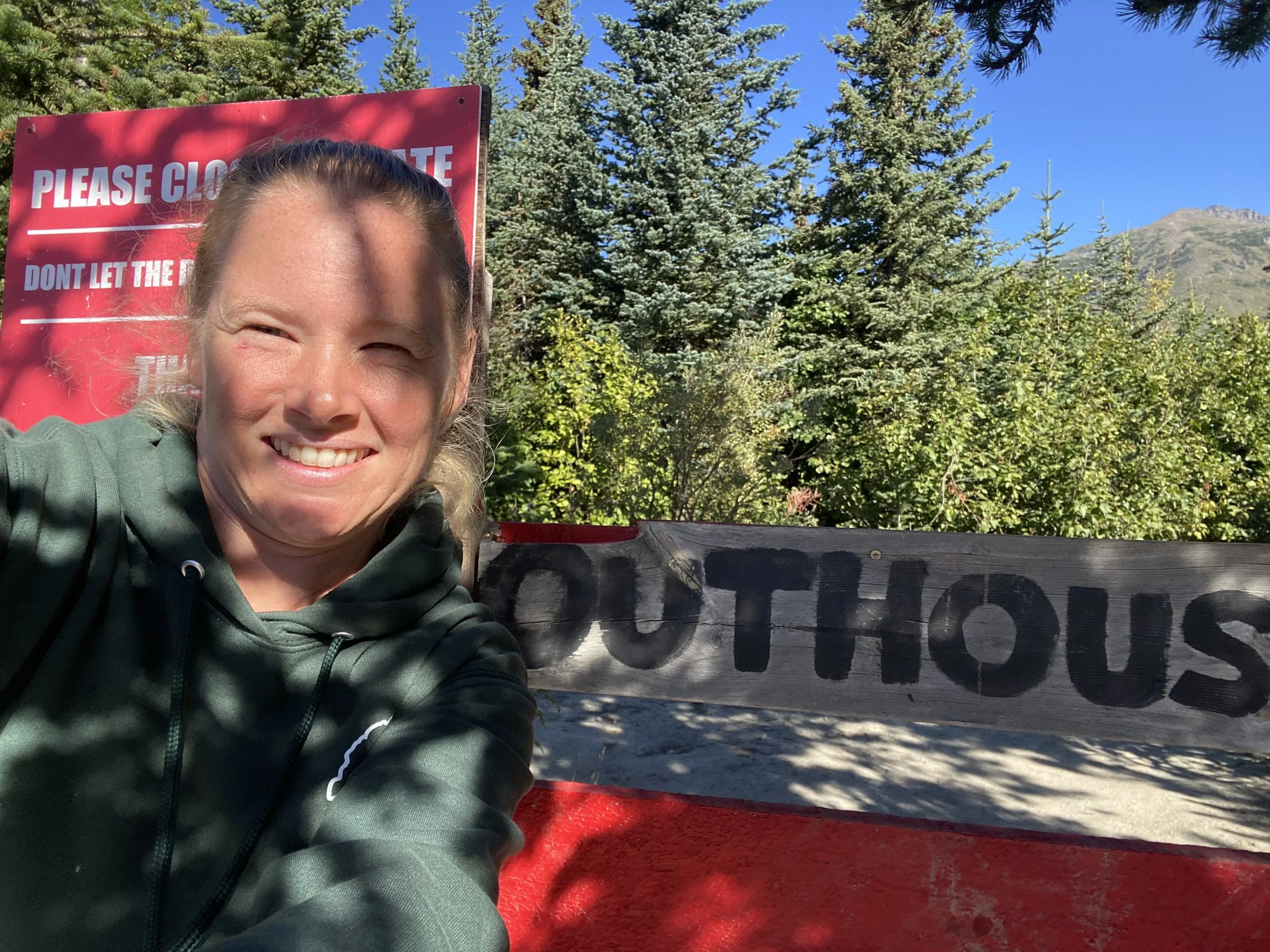
I gave the outhouse a 5-star review.
After our puppy adventures, Joyce and I toured more of Skagway. We’d seen most of it, but we stopped by a store that had Native American fry bread and had some. Yum!